

Stake games
Stake OriginalStake Moles: rules, mole counts and multipliers
Seven positions and a hammer: discover the rhythm of Moles and how the number of moles changes its payout table.
By The Gambling Desk · Published · Verified
Moles takes its theme from the fairground mole game. Seven positions, a hammer and a question after every hit: continue or cash out? The number of moles chosen at the start makes all the difference to multiplier progression.
Find a mole
Set your bet and choose between one and six moles among seven positions. A successful hit increases the multiplier. You can then collect with Cashout or choose another position. A losing choice ends the round and loses the bet.
The hammer and visual cues show your selection’s result. The game keeps the immediate feel of the fairground version, with a potential return that changes after each success.
The Moles controls
Inside the Stake interface
Stake Original Moles in pictures


The side panel contains the bet, mole count and Manual and Auto modes. The screenshot shows a three-mole setup. The multiplier and associated profit appear alongside the controls.
Random Pick chooses a position at random. In Auto, you set the series parameters, including the target hit count and number of rounds.
One or six moles: what changes?
With six moles, six of seven positions are favourable on the first pick, for 1.14×. With just one mole, one of seven positions is favourable, for 6.86×.
The setting therefore trades more frequent hits against bigger multipliers. Increasing the mole count makes the first hit more likely but reduces its multiplier.
Moles multiplier table
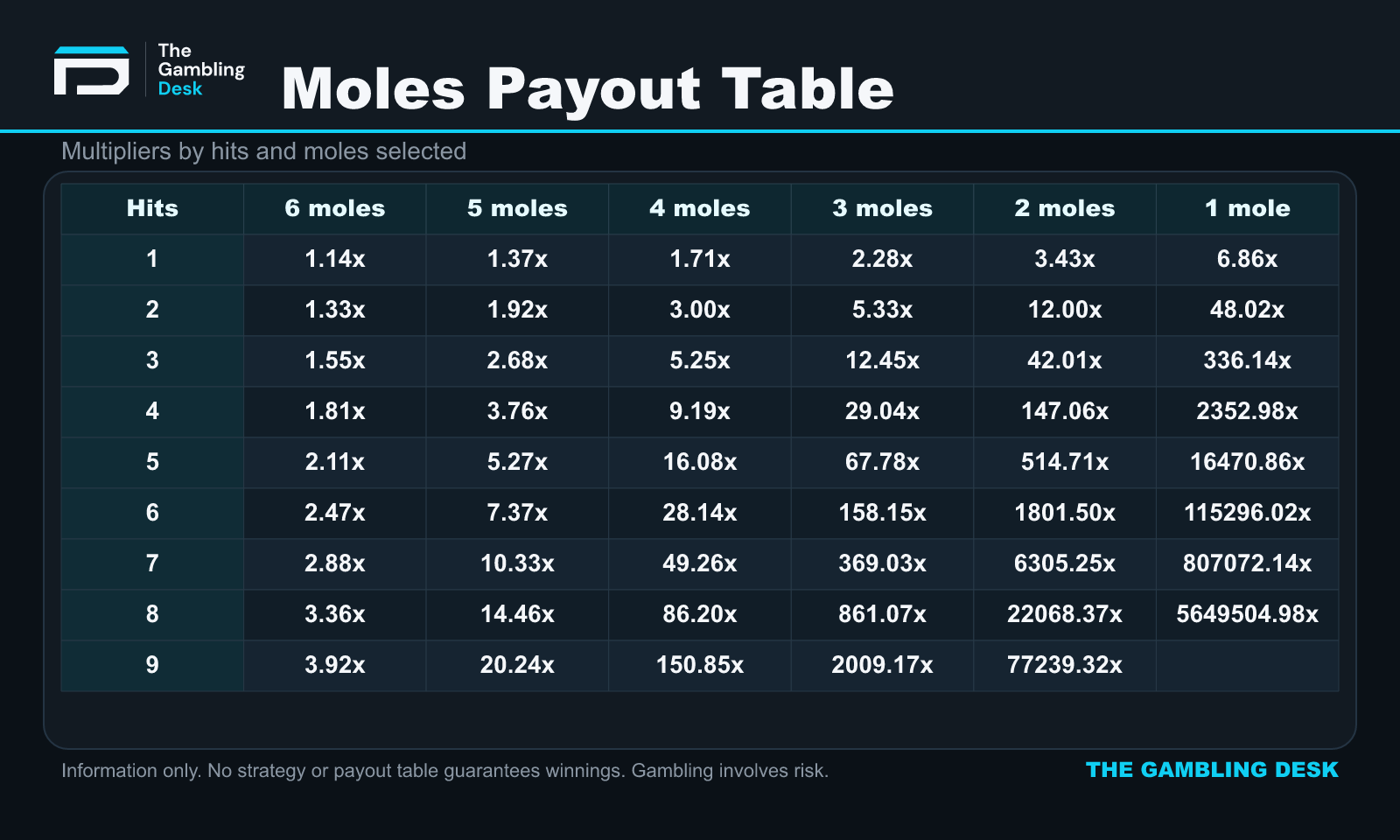
Rows show successful hits; columns run from six moles to one. Choose your configuration, then move down to the hit you want.
With six moles, the table shows 1.14× on the first hit and 2.11× on the fifth. With one mole, it shows 6.86×, then 16,470.86×: the latter corresponds to an exceptionally rare run. Empty cells mark impossible combinations.
To find the image easily, keep the Stake Originals payout tables page handy.
Calculate a round’s return
A 2-unit bet cashed out at 5.25× gives 10.50 units in total. Profit is 8.50 units after subtracting the bet. If you continue and miss the next hit, the previous return is not paid.
Every selection still involves chance. Random Pick does not know the hidden positions, and previous runs do not reveal them. Provably fair, however, lets you check the result after the round.
Frequently asked questions
When can I cash out?
After a successful hit, at the displayed multiplier.
Why do six moles pay less than one?
Because the first hit is much more likely: six favourable positions instead of one.
Can I use the table in Auto mode?
Yes. It shows configuration multipliers regardless of the mode used to carry out the actions.